


I’ve got into trouble talking about e-bikes before, so I’d promised myself I wouldn’t poke the wattage obsessed wasps nest again for a while. But then the Eurobike show opened with one piece of news that nearly every media outlet has made sure is the sole topic of conversation. And it’s a motor system….
Well actually it’s two, but they’re so similar I’m just going to bundle them together. Gobao actually released their X1 and X1P units the day before Eurobike in a classic piece of preemptive, pre show attention grabbing and then unveiled the biggest, brightest stand at the show as a follow up. Meanwhile Avinox’s new MG Concept was revealed on four different ‘concept’ bikes from Mondraker, Canyon, Forbidden and Commencal. And to be clear these aren’t just two more high powered motors from massive Chinese electronics companies. They’re not just MGU (Motor Gearbox Units) either, which would be big enough news in itself. Especially for companies like SRAM and Shimano who currently have a stranglehold on how we change gear using evolved versions of hundred year old derailleur technology.

No these are CVT MGU’s like the system debuted by Owuru at Eurobike 2025. This means that rather than letting the user shift manually through a sequence of specific gears or engage an electric auto shift, these are Continuously Variable Transmissions. That means you can pre set your preferred pedalling speed (cadence) and the unit will almost seamlessly vary the output to keep you spinning at the same speed while you accelerate or slow down. While we don’t have full details yet I’d assume you could also set it up to maintain the same wattage or even heart rate (Avniox and other E-MTBs already have this feature) if you’d rather. Add huge wattages - Gabao’s new motor delivers 1500W peak output and Avinox has said their system only works well with a ‘powerful motor’ available to assist the rider’s efforts and we’re probably looking at a genuine paradigm shift for pedalling. Because not only will you just be turning the cranks with a powerfully driven dislocation from the usual effort input you won’t need to think about matching gearing to terrain or your strength either.
Even without the CVT element MGU’s have a lot of practical and design packaging advantages too. Putting all the drive system and gear shifting weight in the centre of the bike makes it faster to turn and easier to move about while also locking down cornering stability. Removing the weight of a big cassette and bulky derailleur from the far end of the swingarm makes the suspension much more sensitive. There’s no danger of smashing your rear mech off, catching a cable or losing a battery/connection. Instead, everything is hidden and (hopefully) well sealed in the centre of the frame. There’s no derailleur style set up faff with indexing or syncing. Because you don’t need a cassette the spokes can have a much broader stance so the wheel is stronger. There’s no sideways drag of the chain across different gears so it will run with optimum efficiency. Because there’s no need to flex sideways across different cogs you can either use a much stronger heavy gauge chain or even a belt drive as some of the Eurobike concept bikes do. And while there’s almost certainly still going to be a net gain in drag from any internal gearbox, both of these systems clearly have power to spare. While the two motors released for Eurobike have a similar 500% gear range to most 1X derailleur systems there’s potential to go wider more easily than with a chain and cassette. Plus while no one has had a set to weight independently yet, Avinox are saying complete system weights for their MG Concept design is a similar weight to a rear mech, cassette and shifter system.
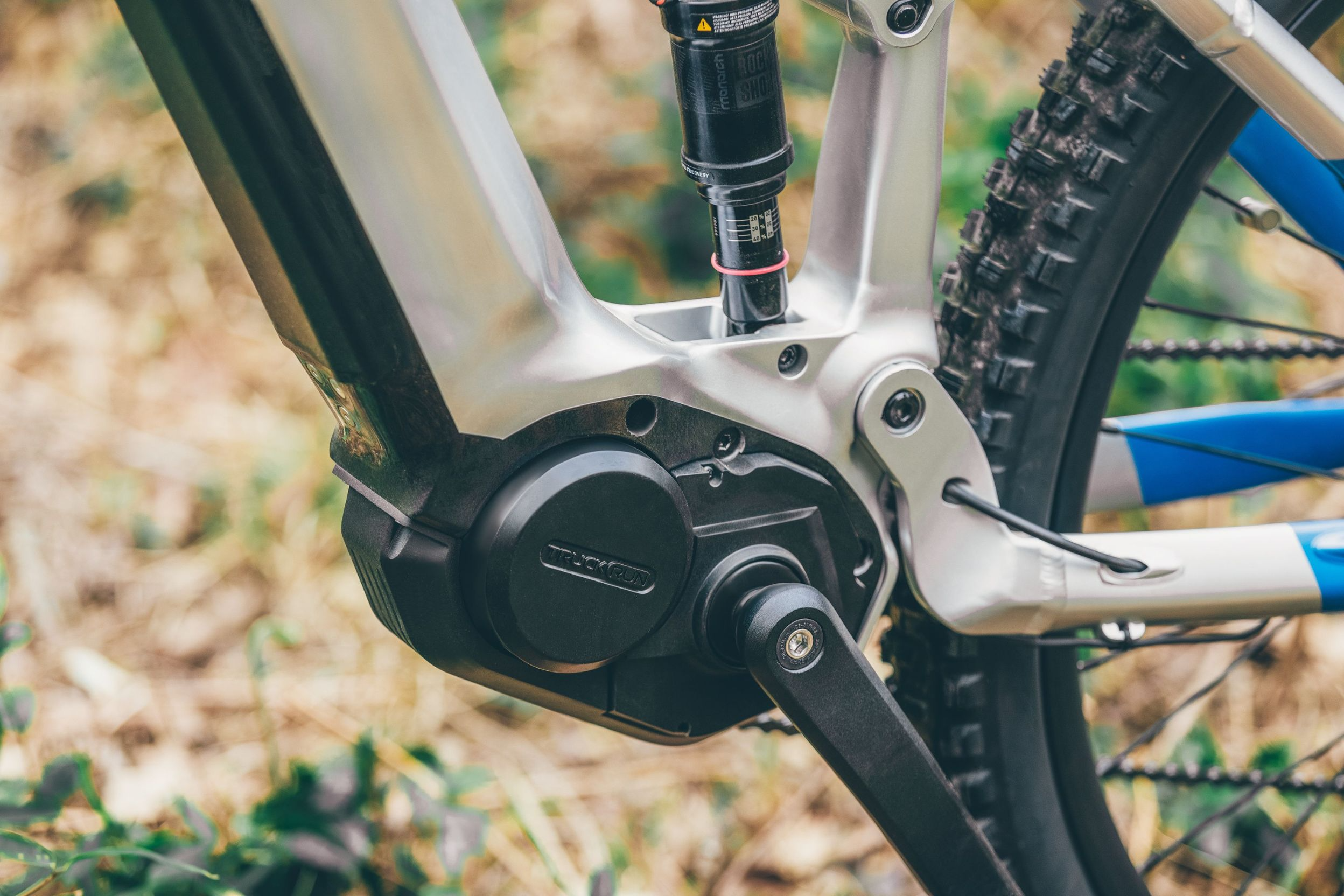
And that all sounds fabulous presuming it works. However it’s another big step away from easily fixable - or at least get you home bodgeable - issues. For example most people can bend a mech back accurately enough to get it running OK. Cables can be retensioned or replaced and even an AXS or Di2 rear mech isn’t structurally massively different to repair if the electrics are OK. And while wireless gears and motors are already taking repairs off the trailside, putting everything in one sealed box seems like even more of a DIY maintenance killer. But as I’ve already said, having everything in a sealed box rather than at the mercy of filth, crashes and rock smashes should definitely improve survivability. All this is something that we’ll find out when these motors finally start appearing (Avinox are currently saying late 2027 but the Commencal looks very close to a production ready frame). And we’ll also find out then whether all the people who’ve been treating the idea of a widely available, well priced MGU like the second coming of Christ will put their money where their online comments are.
One thing that’s already very striking though is that it further cements a dramatic shift in mountain biking conversations. Underlining that motors not the bikes they’re mounted in are now the biggest news and dominant coverage collectors.
Which begs a VERY big question. If motors are the component that everyone seems to be talking about now and we’re surrendering even more of the experience and involvement of riding them to electronics, are we even talking about mountain bikes anymore? Or are we basically talking about motorbikes?


