


Dry and dusty trails can be fantastic but biking when it’s boiling throws up a different set of challenges. So how do you stay cool rather than cooked when Rotherham is the same temperature as Rhodes and do you need to make any adjustments to your bike if it’s baking hot?
Sunburn
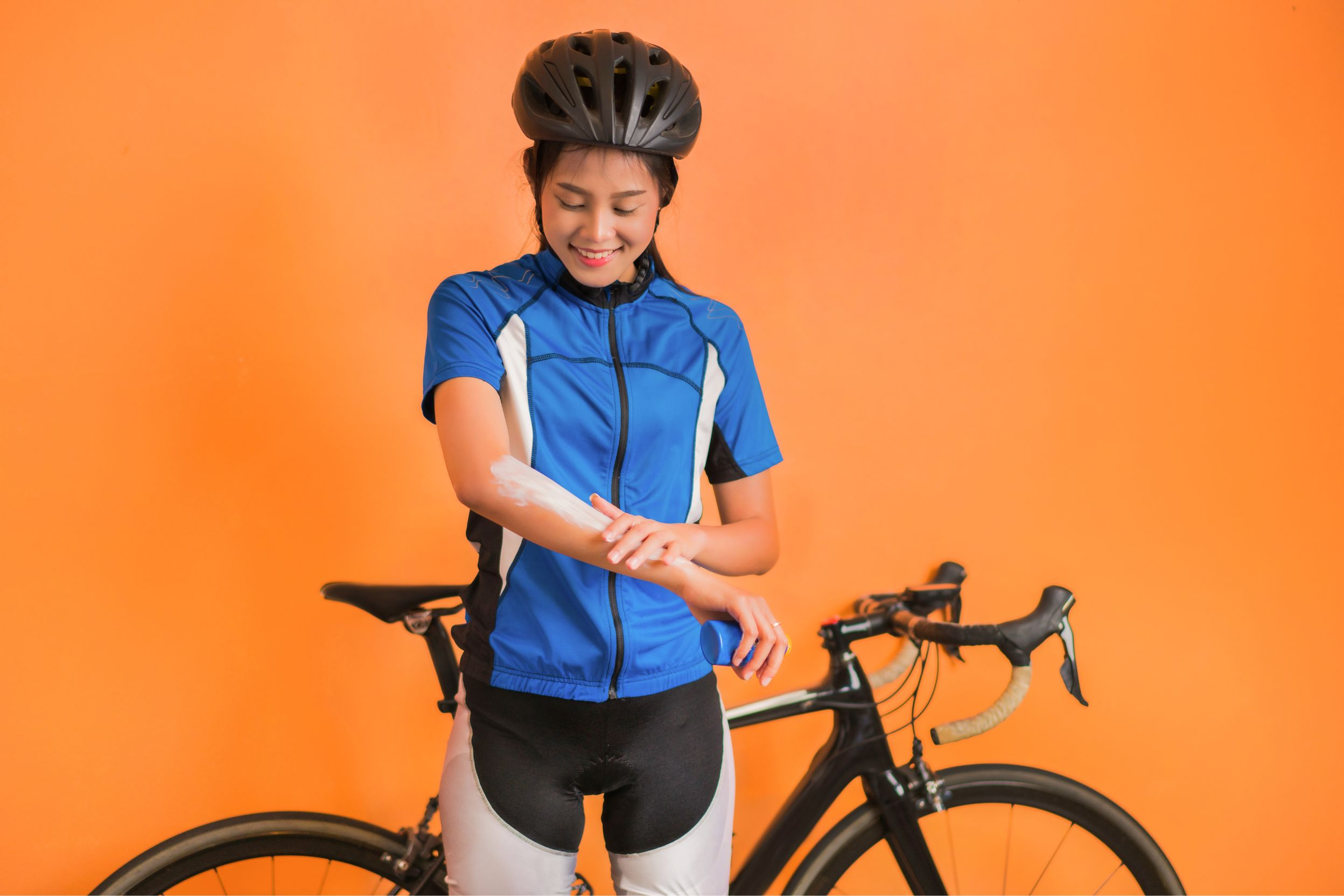
If you don’t know the dangers of unprotected sun exposure in terms of burning and skin cancer then it’s tempting to let Darwinism do its stuff. However, there are literally some bits you might have missed when it comes to slapping on the SPF.
Without descending into A-Level chemistry, chemical and mineral suncreams work in different ways depending on their composition. The important thing is to apply before starting your ride, they need 15-20 minutes to be effective, and be sure to re-apply regularly to help prevent being washed, sweated or wiped off therefore reducing their effectiveness. Oh, and pro tip – ALWAYS put your contact lenses in before applying suncream. Trust me on that one.
Always over cover as short legs and sleeves can ride up and socks can slide down. Noses can be extra vulnerable if you wear reflective specs, and if your hair is history, make sure you screen your skull before you end up with a vent pattern tattoo. Be sure to use high protection creams on your ears to stop them from ending up like bacon rind too.
If you do get burnt aloe vera is a great skin healer and be sure to cover any pink patches fully for the next few days.
Dehydration
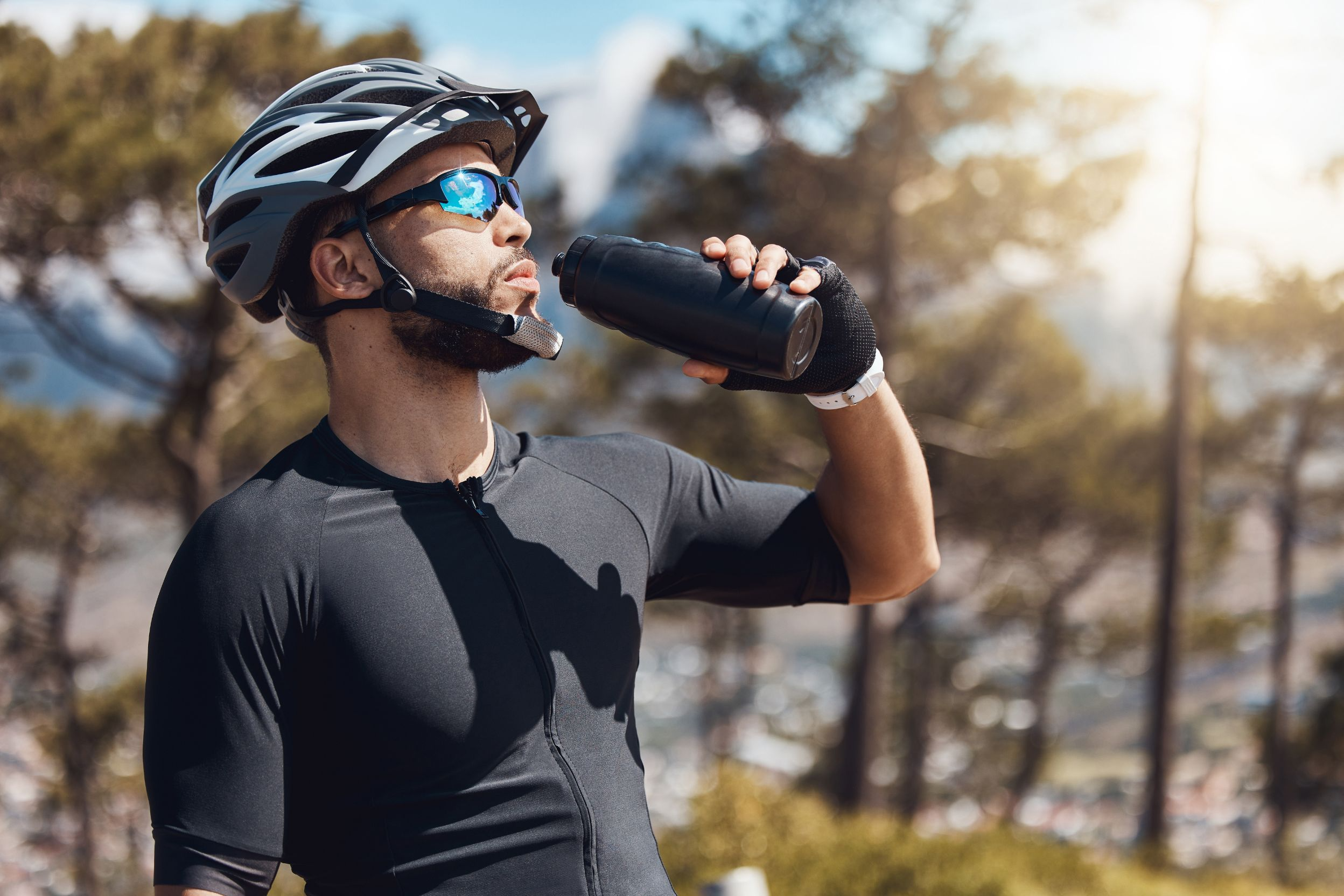
Even dropping a few % of your water level will put the brakes on your biking in terms of pedal power. Serious dehydration can cause long-term organ damage in just a few hours too. That means you need to start summer rides fully hydrated. Check with the porcelain doctor to see if your pee is clear before riding and if not, neck some more water. Then keep sipping regularly (like every ten/fifteen minutes) all day long rather than waiting until you feel thirsty.
If that’s going to need more water than you can carry on your bike, then get a hydration pack with a reservoir or stick extra bottles/flat pack flasks in a bum bag or backpack. Still need more? Make sure you build water top up points into your route or if you’re going off grid, get yourself a filtering system so you can use streams.
Don't assume any drink hydrates you equally well, either. Isotonic drinks (i.e. Lucozade Sport) — balanced to roughly the same concentration as your body fluids — are the go-to for exercise: they're a solid all-round compromise, absorbed quickly while also replacing the electrolytes and carbs you're burning through. If sheer speed of rehydration is what you're after, hypotonic drinks — slightly more dilute than your body fluids — actually cross into your bloodstream a touch faster, though they carry less fuel along the way. Plain water works fine too, especially on shorter rides (typically under 60–90 minutes), though on long hot days it can dilute your electrolytes if it's all you're drinking. Hypertonic drinks (i.e. Coke, original Lucozade) — the very sugary "energy" drinks — are more concentrated than your body fluids, which slows how fast your gut can absorb them and can briefly delay rehydration rather than helping it; think of them as fuel, not hydration. As for caffeine, the old advice that it dehydrates you doesn't hold up that well for people who drink it regularly — your body adapts and the diuretic effect is pretty minor in normal amounts. It's not a magic hydration fluid, but a normal coffee before a ride isn't the enemy it's made out to be.
Staying cool
Watch any pro bike racing these days and you’ll see the efforts riders make to stay cool with ice vests on the start line and ice socks around their necks or ‘dump bottles’ of cold-water during races. That’s because even a slight increase in core body temperature can tank your performance and once that internal thermostat gets over 40℃ you’re into heatstroke territory which is really dangerous.
That makes staying cool by drinking plenty of cold fluids, and wearing appropriate light, easy to ventilate clothing essential. Running cold stream water over your wrists is also a great way of cooling down. Bombing straight into lakes/streams when you’re proper hot can cause potentially heart stopping thermal shock though (yes dramatic, but true). So, get into cold water gradually, however fun leaping in looks.
Sweat
Sweating is a good thing as it cools your body down by speeding up heat transfer. That makes wicking fabrics that suck sweat off your skin and spread it over the largest possible evaporating area crucial to keeping cool. They also reduce chafing by stopping the bits of you that rub together, getting too soggy.
Filtering a ton of salty, mineral rich fluid through their threads unsurprisingly creates ideal conditions for bacteria to breed and start stinking the place up though. That means wool - with its naturally anti-bacterial properties - can be a good choice for back-to-back bikepacking days without laundry possibilities. It doesn’t dry or wick nearly as well as synthetics though, so you’ll be soggier when riding. The same applies to cotton rich clothes which are best avoided on the bike whatever the weather.
Make sure you keep wicking fabrics wicking properly by using a washing powder that doesn’t have conditioner in too. Because that silky smooth feeling comes from coating and therefore clogging the fibres that transfer moisture.
Snacks and ‘solutions’
While drinking is the priority, you still need to keep your energy levels topped up but try and pick food that’s moist rather than dry so think fruit rather than dry cereal bars. Don’t go overboard with salty snacks either, even if your body might be craving them.
We’d be similarly wary of the various super hyped ‘hydration’ tablets and drinks that are available too. If you’re an elite athlete pushing super hard in hot conditions, then they’re a great way of replacing minerals and potentially reducing cramp. From my own experience as a far from elite, but long term ‘athlete’, my body can otherwise regulate it’s minerals fine. As a result, taking extra pills and powders can actually cause me to cramp when I’d be fine otherwise.
Hands and Feet
Heat can cause any bit of your body to swell, but that’s most obvious with your feet as they’re often crammed into tight shoes. That makes wearing thin - ideally fast wicking - socks a smart move to allow more expansion room. And go easy on the tightness of laces/dials if you don’t want your pinkies to go numb in summer.
If you’re really suffering with hot feet then consider a pair of shoes with a lot mesh venting panels but be ready to gaffer tape over them when the regular weather returns.
If you’re used to riding without gloves consider popping a thin pair on for the descents when it’s super hot. Even the tackiest grips or tape can get more difficult to hang on to if you’re palms are sweaty, and it’s no fun having a hand slip off the bars when you’re hurtling downhill.
Dry lubes
The bike industry loves selling us BS we don’t need but switching to a dry, wax style lube when things get dusty is definitely a good idea. Otherwise, oily chains can soon get filthy and increasing transmission wear.
E-bike motors
I always used to think of the cooling fins on e-bike motors in the same way as mesh panels on shoes - something that other people needed while I was more concerned about waterproofing. Now that the Surrey Hills and Spain are running at similar temperatures though, overheating can be a genuine issue. Cooking batteries doesn’t do them any good either, so keep your e-Bike in the shade as much as possible, particularly if you’ve been working it hard up a climb.
Tyres
Rubber is very sensitive to temperature variations, so some soft compound tyres will feel extra draggy and wear/tear quicker in hot weather. That makes switching to a harder compound the sensible move for speed and durability if the thermometer stays silly. Remember to switch back or dial back your grip expectations when this blog means we get the coldest and wettest August in history.
Suspension
If you’re old enough to remember Polaris Challenge events the first time around, you’ll remember that forks full of rubber chunks and shocks with less than a teaspoon of oil in used to go haywire in the heat.
However, I’ve listened to a couple of chats from top race suspension techs and R&D spring kings recently who’ve confirmed what I was already thinking. Modern suspension is barely affected by ambient temperature shifts as air springs and damping oil are already running surprisingly hot. If it makes you feel better though, add a click more rebound damping on hot days as the ground will be harder and therefore absorbing less energy anyway.


